Retrofit insulation in Valdosta GA - a cooler house without tearing out walls
Hot rooms upstairs and a power bill that keeps climbing? We seal the leaks and add insulation to the house you already live in.
- Fully licensed and insured.
- Free quotes on site.
- Replies within 1 business day.
What goes into retrofit insulation for an attic and walls you already have?
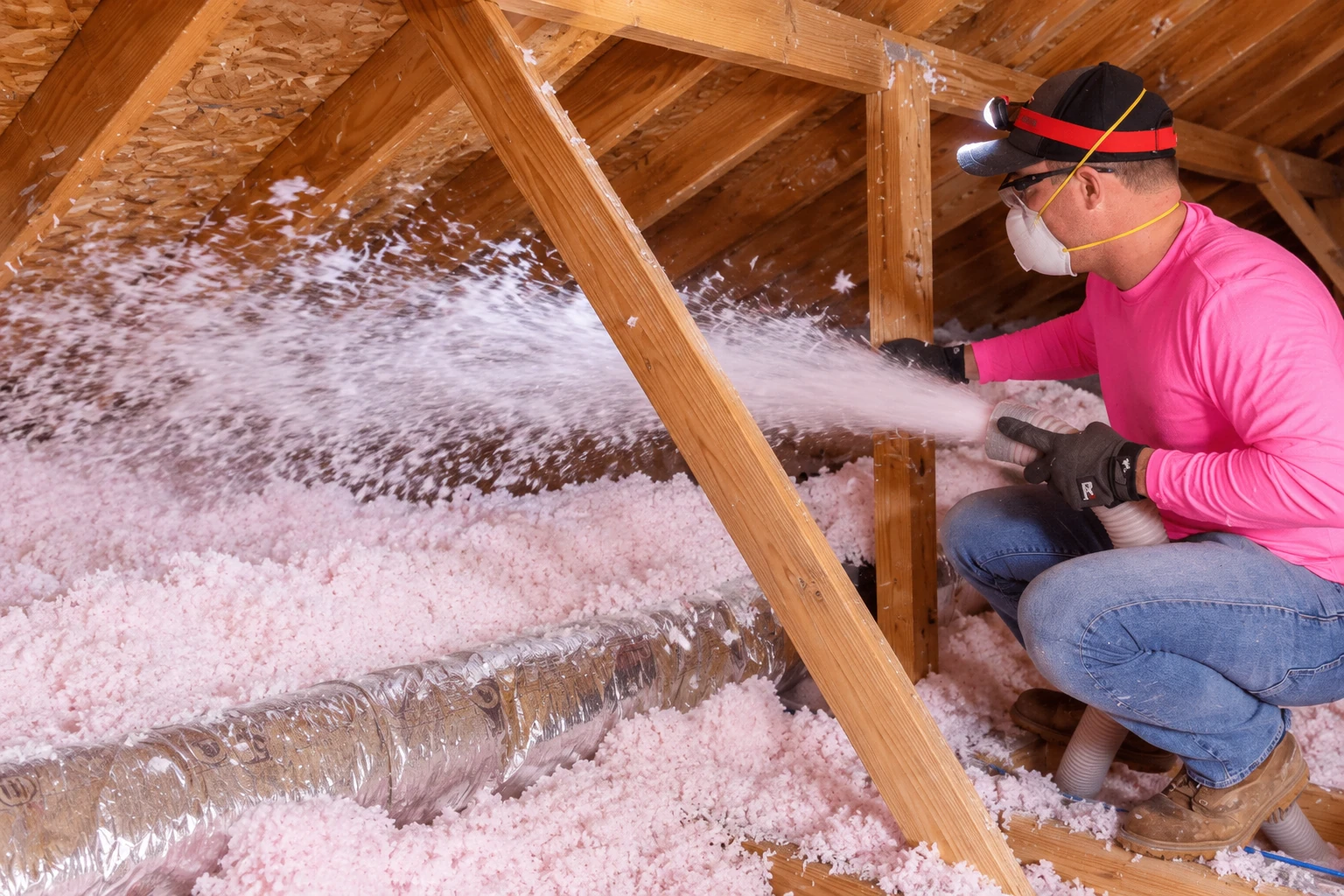
Retrofit insulation means adding insulation to a house you already live in, usually blown-in, loose fill we blow through a hose, over the attic floor and sometimes inside the outside walls. In Valdosta it's how we take the heat out of a hot upstairs and bring the power bill down, and it nearly always starts with air sealing, closing the gaps between your rooms and the attic before any insulation goes in.
Most people call because the upstairs runs hot, the room over the garage never feels right or the power bill keeps creeping up, even though the house already has some insulation. The price turns on how many inches are up there now, how much sealing the attic needs, whether the walls are part of it and whether old material that's wet or full of droppings has to come out first through insulation removal. The schedule turns mostly on what has to be fixed before we start, like a roof leak. Once I've seen your house, the estimate gives you the figure for yours.
How can you tell your house needs more insulation?
Upstairs stays hot
The bedrooms upstairs run warmer than the rest of the house all summer, and the AC never quite catches up by evening. That usually means the attic floor is thin or leaking air, and every month it waits, the system runs longer to make up for it.
The room over the garage
One room, often over the garage or a porch, is hot in summer and has cold floors in winter. Those spaces were often insulated last and lightest, and leaving them alone just means a room nobody wants to use.
Flat, thin attic insulation
When you look in the hatch, the old insulation is packed down or gray in spots, or you can see the tops of the ceiling joists. Thin or dirty fill isn't slowing much heat, and if it's stained, there's a leak above it that keeps doing damage while you wait.
Work that often goes with a retrofit
Spray foam insulation
Foam fills odd spaces like knee walls, rooflines and the room over the garage, sealing air and insulating in one pass where loose fill won't stay put.
Attic insulation
When the attic is close to bare, or the old fill has to come out, a full attic job starts over from the floor.
How we handle retrofit insulation in a house you live in
We start by looking at what's already in the attic and walls, how many inches, what kind and whether it's dry and clean, because new material laid over soaked or dirty insulation just keeps the problem. Then we seal the attic floor around can lights, pipes, wires and the hatch, so the new insulation isn't fighting a draft. We keep the eave vents open so the attic can still breathe, and we blow the loose fill evenly across the ceiling. Walls go in through small openings instead of torn-out drywall, and if new siding is coming, we can time the wall work to go with it.
Sometimes loose fill isn't the right answer. Spray foam insulation costs more but seals air while it insulates, so I point people to it when the ductwork lives up in the attic. Otherwise, sealing the gaps and topping up loose fill usually does the job for less. If the attic turns out to be close to empty, what you need is really attic insulation from the floor up, and I'll tell you that at the estimate.
Attic top-up with sealing
This suits most houses that have some insulation already, dry but thin or packed down. We seal the attic floor and blow loose fill over what's there, which keeps the cost down and leaves the ceilings below alone.
Wall fill from inside or out
This suits rooms that stay uncomfortable after the attic is right, or houses getting new siding. The walls are filled through small holes, so your rooms keep their drywall and trim.
Get a retrofit insulation estimate for your attic and walls
Send the form and we'll reply within one business day to set up a free visit at your house, with no obligation. You can also call (229) 427-0044.
Call (229) 427-0044Service areas
Why Valdosta homeowners call B&G Valdosta Spray Foam Insulation for retrofit work
The owner looks first
I come out to look at your house myself, and our installers do the work from what we found together. Before we call it done, I check it with you, so the person who made the plan is the one who signs off.
Years in heating and cooling
I spent years in heating and cooling work before I started this business in Valdosta in 2023, so I check that fuel-burning appliances still vent the way they should and that fresh air is planned in. A tighter house is only worth it if it's safe to live in.
Fully licensed and insured
We're fully licensed and insured. The city's Inspections Department is there to see that work in Valdosta is done by licensed contractors and meets the codes that apply, and that's the standard we work to.
On this job the order of the work decides whether it pays off. Tell us about your house and I'll come take a look.
What happens after you call about retrofit insulation in Valdosta?
Call or send the form
Call (229) 427-0044 or send the form, and we get back to you to set a time. A line about what's bothering you, like a hot room or a high bill, tells me where to look first.
I look at it with you
I come out and go through the attic and walls with you, checking how much is there and what shape it's in. If something has to be fixed before we start, like a leak or wet insulation, I point it out right there.
You get a clear estimate
You get a clear estimate for the work, including anything I pointed out that has to come first. You decide from there, and nothing starts until you say go.
Install, then a final walk-through
Once you say go, our installers do the work, and before we call it done I walk the finished job with you. You see the sealed spots and the new insulation while they're still easy to look at.
Common questions
How much does attic insulation cost in Valdosta?
Across the US, attic insulation usually costs about $1,700 to $2,500 per job, and that's a national figure for the attic, not our price. A complete bid should include sealing the gaps into the attic before any insulation goes in, so check for that when you compare bids. Your own number comes from the estimate after I've been up in your attic.
Can my walls be insulated without opening them up?
Yes, in most finished homes. The common way is drill and fill, where small holes go near the top of each wall cavity, the space between the studs, and blown-in insulation fills it. It can be done from inside or outside, so your rooms stay intact.
Is my older Valdosta home a good fit for wall insulation?
Usually it is, but two things need sorting out first. Lead safety rules can apply to wall work in homes built before 1980, depending on how much the walls get disturbed, so tell us the build year before anyone drills a hole. The electrical code also doesn't allow insulation on or around knob and tube wiring, the early style of house wiring, so if your house has it, we plan for those spaces before any insulation goes in.
How do I decide whether to insulate the attic, the walls or both?
In most houses, start with the attic, because it's the easiest place to reach and where the summer heat comes in. Covering the whole ceiling out to the tops of the walls is what gives the house the heat-slowing ability it needs, so the edges matter as much as the middle. Walls make sense when a room still runs hot or cold after the attic is right, or when the siding is coming off anyway.
What causes moisture problems in an attic after new insulation?
The usual cause is buried eave vents, because insulation blown into the eaves blocks the airflow and the attic stops drying out. Baffles, guides set at the eaves, keep that ventilation open and stop the fill from falling into the eaves. Guidance also says an attic that's sealed and brought inside the cooled space needs a way to remove moisture, and in hot, humid climates, cold AC ducts in the attic can sweat in summer and drip onto the attic floor, which risks mold and rot.
Who issues building permits in Valdosta?
The city's Permit Office issues permits to build, alter or repair a building in Valdosta, and its list names work like roofs and patios, not insulation. Check with the Permit Office for your address. Before we start, we check with them too, and when a permit is needed we pull it ourselves as the contractor, which matters because the city says it's illegal in Georgia for a homeowner to buy a permit for someone else to do the work. We're based in Valdosta and also work in Bemiss, Adel and the cities around them, and we check with the office for each address the same way.
Tell us about your attic and walls
Have your home's build year, what's in the attic now and any siding plans handy when you call (229) 427-0044 or send the form, so the visit starts in the right place.