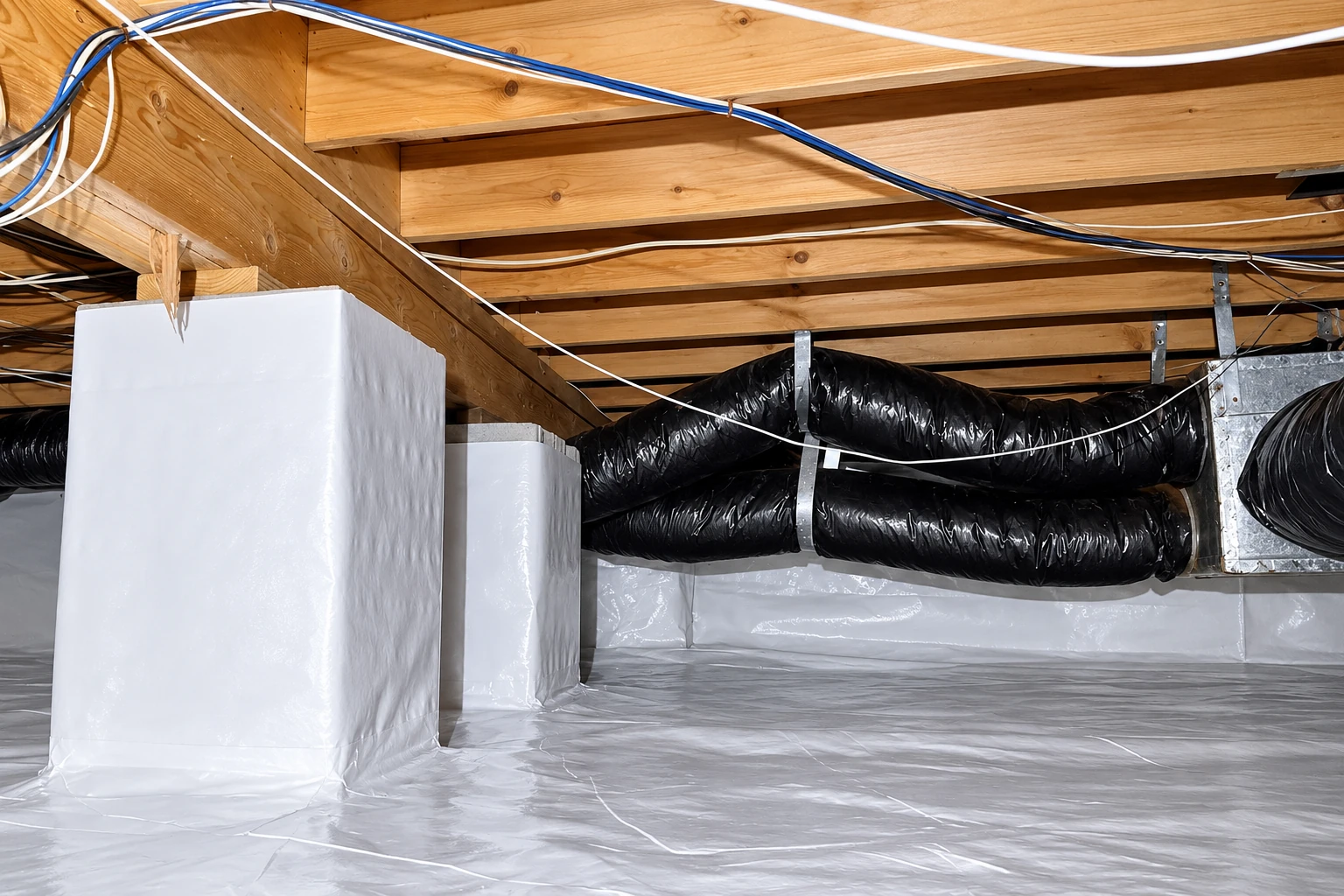
Vapor barrier installation in Valdosta GA - a crawl space floor covered to the walls
Musty smell under the house, or bare dirt in the crawl space? We cover the ground and run the plastic up the walls and piers.
- Fully licensed and insured.
- Free quotes on site.
- Replies within 1 business day.
Does your crawl space need a vapor barrier, or a fully sealed crawl space?
Vapor barrier installation in Valdosta means laying a plastic ground cover, sometimes called a vapor retarder, over the dirt floor of your crawl space. It slows the moisture coming up from the soil and helps keep soil gases out of the rooms above. At B&G Valdosta Spray Foam Insulation, we often do it along with sealing the crawl space and insulating its walls, or as the fix for an old sheet that's torn.
Most people call us after they notice a musty smell, cold floors, or a plumber or HVAC tech tells them the dirt under the house is bare or the old plastic is ripped. The price mostly comes down to how big the crawl space is, how many piers and walls the plastic has to wrap, how much stored stuff and debris has to come out first, and whether you want plain plastic or a tougher reinforced sheet. The schedule turns on how easy the space is to get into and whether something has to be fixed first, like a leak, because I won't lay plastic over a wet problem. Once I've been under your house, the estimate gives you the plan and the number for your crawl space.
How do you know your crawl space needs a vapor barrier?
Musty smell in the house
Air from the crawl space works its way up into the rooms, so a damp, stale smell inside often starts with damp soil underneath. The longer it goes, the longer the floor framing and any insulation down there sit in that wet air.
Bare dirt under the house
If you look through the crawl space door and see open ground, nothing is slowing the moisture coming up out of the soil. That moisture keeps coming every day, so the sooner the floor is covered, the less of it ends up in the wood.
Torn or bunched plastic
Old sheets usually rip along the path someone crawls to reach the furnace or ductwork, or they pull back from the walls over time. Every gap lets ground moisture through, so a cover that's mostly holes isn't doing much of its job.
Work that often goes with it
Attic air sealing
Covering the crawl space handles the bottom of the house, but gaps in the attic pull air up through the floors, so sealing them closes the other end.
Retrofit insulation
Older houses often have little insulation in the walls or attic, and adding it to the house you already have makes sense once the ground underneath is covered.
How we install a crawl space vapor barrier
I start by looking over the whole crawl space, because if there's a plumbing leak or water coming in after a rain, plastic laid on top just hides the problem, so that gets fixed first. Once the space is clear, our installers cover as much of the ground as we can reach, overlap the seams and run the plastic up the piers and the foundation walls so moisture has fewer ways in around the edges. Where someone has to crawl in to service a furnace, ductwork or a water heater, I'll suggest a tougher sheet, since that's the stretch that gets crawled over the most.
If we're sealing the crawl space and not just covering the floor, I make sure any gas furnace or water heater down there still vents the way it should, and we plan fresh air for the house from the start. The crawl space is only one end of the house, so attic air sealing closes the gaps up top that draw air through the floors, and retrofit insulation adds insulation to an existing house that was built with too little.
Ground cover with the vents left open
This suits a crawl space you'd rather keep vented, or a house where you mainly want bare dirt covered or a torn sheet replaced. It's the simpler job and costs less, though outside air still moves through the space.
Ground cover in a sealed crawl space
This suits houses with ductwork or a furnace under the floor, because closing the vents and insulating the walls keeps that air drier and closer to the temperature inside. It costs more, and when the equipment lives down there, it's usually the way I'd go.
Get a vapor barrier estimate for your crawl space
Send the form and we'll reply within one business day to set up a free look at your crawl space, with no obligation. You can also call (229) 427-0044.
Call (229) 427-0044Service areas
Why Valdosta homeowners call B&G Valdosta Spray Foam Insulation for vapor barriers
The owner looks at it first
I come out myself, go under the house and point out anything that has to be fixed before we start. Our installers do the work, and I check it with you before we call it done.
Years in crawl spaces already
I spent years in heating and cooling work, a lot of it in attics and crawl spaces, before I started this business in Valdosta in 2023. I know what the equipment under your house needs room for, so the plastic gets laid with service access in mind.
Permit checked before we start
Before any work, we check with the permit office for your address, which for Valdosta, Hahira, Lake Park and Dasher is the city's Inspections Department. When a permit is needed, we pull it ourselves as the contractor, which matters because in Georgia it's illegal for a homeowner to buy a permit for someone else to do the work.
Fully licensed and insured business
We're fully licensed and insured. That covers you while our crew is working under your house.
On this job, what counts is getting the floor covered and the plastic up the walls and piers, with any leak fixed before the first sheet goes down. Contact us and I'll come take a look.
What happens after you call about a vapor barrier?
Call or send the form
Call (229) 427-0044 or send the form, and we'll set a time to come out. It helps to tell us roughly how big the crawl space is and where the access door is.
I look under the house
I come out, look over the crawl space with you and point out anything that has to be fixed first, like a leak or a torn duct. You'll know what I found before anyone talks about plastic.
You get a clear estimate
It spells out which sheet I'd use, where it runs, any repairs that come first and the price. Nothing starts until you say go.
We install, I check it
Our installers lay the plastic and run it up the piers and walls. Then I go over the finished job with you before we call it done.
Common questions
Do I need a vapor barrier if my crawl space has vents?
Yes, a plastic ground cover is recommended whether the crawl space is vented or sealed. In humid climates, building scientists go further and recommend sealing and insulating the crawl space, because warm outside air coming through the vents can condense on cooler framing. I'll look at yours and tell you which way I'd go and why.
How much does a crawl space vapor barrier cost in Valdosta?
Across the US, crawl space vapor barrier installation usually costs about $1,200 to $4,000 per job. That's a national figure, not our price, and where your crawl space lands depends on what I find when I'm under the house. The estimate gives you the number for yours.
What is the best plastic for a crawl space vapor barrier?
Thicker, reinforced polyethylene holds up better than thin, plain sheeting. Thin plastic needs protecting wherever people crawl over it to reach equipment, so if your furnace or ductwork under the house gets serviced regularly, the tougher sheet is usually worth it. We settle the exact sheet at the estimate.
How do I get my crawl space ready for a vapor barrier?
Clear out anything you've stored down there, along with loose debris, so the plastic can cover the whole floor. The plastic should cover the floor completely or as close as we can get, and that includes spots you've been using for storage. If something's too heavy to pull out, tell us when you call.
Can an old crawl space vapor barrier be repaired instead of replaced?
Often it can, because standard installer guidance covers repairing an existing ground cover as well as putting in a new one. I'll look at how torn it is, whether it still reaches the walls and piers and whether the ground under it is wet, then tell you whether patching or replacing makes more sense.
Should I talk to my termite company before sealing my crawl space?
Yes. A guide on closed crawl spaces advises working with your pest control company so the job leaves their treatment and any warranty they've given you unaffected. If you have a pest contract, bring it to the estimate and we'll plan the job with it in mind.
Get your crawl space floor covered right
Call (229) 427-0044 or send the form with your crawl space's rough size, whether it has vents and any pest treatment contract, so I can plan the visit around your house.