
Wall insulation in Valdosta GA - walls filled tight without tearing them open
Drafty rooms and a summer power bill that won't quit often mean empty walls. We fill them through small holes and patch them.
- Fully licensed and insured.
- Free quotes on site.
- Replies within 1 business day.
How do you add wall insulation to a finished house in Valdosta?
Wall insulation for an existing Valdosta home usually means drill and fill. We bore small holes near the top of each wall cavity, the hollow space inside the wall, pack it full of blown-in insulation, which is loose fill sent through a hose, and patch the holes. It slows the heat coming through your outside walls so rooms stay closer to the thermostat, and it's often paired with air sealing, closing the gaps around windows, outlets and the attic.
Most calls about walls start with a room that never feels right, warm all afternoon or cold along the outside wall on a January morning, even after the attic's been done. The price moves with how much wall there is, what your siding is, which side we work from and what the house needs before we fill, like older wiring or lead-safe prep. The schedule turns on those same things and on whether a permit is needed, and the estimate puts it all in writing for your house.
How can you tell your walls need insulation?
Rooms that stay hot
The rooms on the sunny side of the house stay warm long after the sun goes down, and the AC can't seem to catch up. That usually means the outside walls are empty or only partly filled, and every summer you wait, you pay to cool air the walls keep heating.
Drafts at outlets and switches
You hold a hand near an outlet on an outside wall and feel air moving. That's a sign the wall cavity is open to the outside with little or nothing in it, and the longer it stays that way, the more your system works to replace that air.
A power bill that creeps up
Your bill runs higher than neighbors with houses about your size, and nothing about how you live has changed. Walls are often part of it along with the attic, and it's worth finding out which one is costing you more before you spend on either.
Often done alongside wall insulation
Air sealing services
Gaps around windows, outlets, plumbing and the attic hatch let air slip past insulation, so sealing them first keeps filled walls from fighting a steady draft.
Basement insulation
If cold floors or a damp below-grade room bother you as much as the walls do, insulating the basement walls closes the rest of the house's shell.
How we handle wall insulation
We start by deciding with you which side to work from, because that choice comes down to your siding and your plans for it. Working from outside means breaking through the drainage plane, the layer behind the siding that sheds water, and that layer then has to be patched or replaced, so if you're planning new siding anyway, that's the time to fill from outside. If the siding is staying, inside usually makes more sense, and those holes get plugged, mudded, sanded smooth and painted. Either way, we drill small holes near the top of each cavity and pack it tight, because fill that goes in loose settles over time and leaves empty spots at the top of the wall where nobody will ever see them.
Filled walls do the most good when the leaks are closed too, so we often pair this job with air sealing around windows, plumbing runs and the attic. If you have a below-grade room that stays cold or damp, basement insulation takes care of the walls under the soil line.
Blown-in cellulose or fiberglass
This suits finished walls you don't want opened, because it fills odd-shaped and hard-to-reach cavities through small holes. The cellulose makers' group says properly installed cellulose can work well for decades, and it adds some sound control and fire protection.
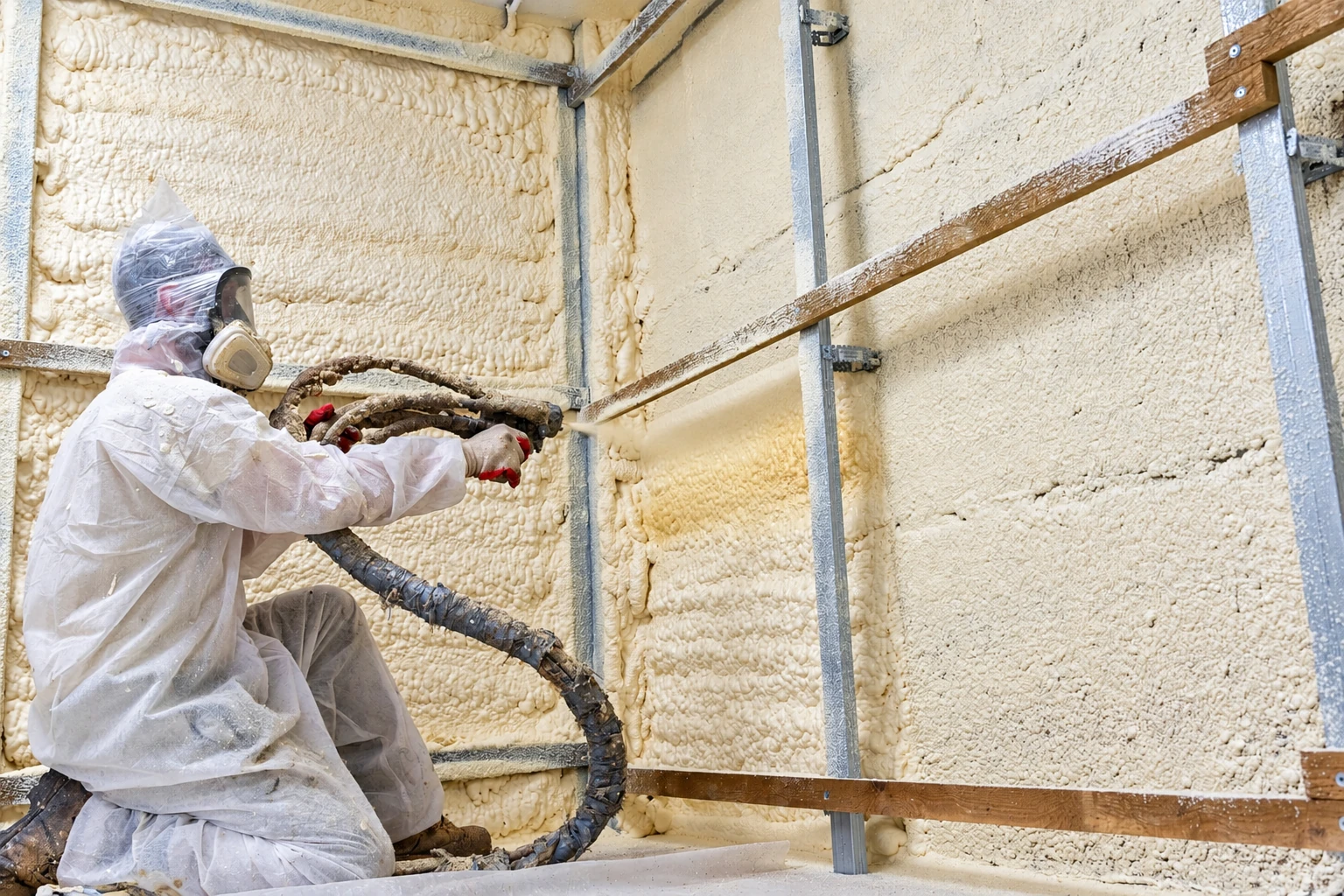
Spray foam in open walls
When a remodel already has the walls open to the studs, spray foam makes sense because it seals air and insulates in one pass. It costs more than loose fill, so we recommend it only when the walls are open and the job calls for it.
Get a free on-site estimate for your walls
Send the form and we'll reply within one business day to set a time for me to look at your walls. The estimate is free, with no obligation, and calling (229) 427-0044 works too.
Call (229) 427-0044Service areas
Why Valdosta homeowners call B&G Valdosta Spray Foam Insulation about their walls
I look at every job myself
I come out to see your walls in person, and our installers do the filling. Before we call it done, I check the work with you, so the person who quoted the job is the one who signs off on it.
Years in attics before this
I spent years in heating and cooling before switching to insulation, and I started this business in Valdosta in 2023. That background is why I check that your fuel-burning appliances vent the way they should and plan fresh air in before we tighten up a house.
Fully licensed and insured crew
We're fully licensed and insured, and I'm glad to show you that before anyone drills a hole. The city also points residents to Georgia Professional Licensing at the Secretary of State to report an unlicensed contractor, so you know where to turn if a contractor isn't what they claimed.
On walls, what matters most is a full, tight fill and patches you can't find later. Reach out here and I'll come take a look.
What happens when you call about wall insulation in Valdosta?
Call or send the form
Call (229) 427-0044 or send the form, and we'll set a time to come out. It helps to tell us your home's age, your siding type and any plans to re-side.
I walk your walls with you
I come out, look at the walls with you and point out anything that has to be fixed before we fill, like old wiring. You get a clear estimate before anything starts, and nothing happens until you say go.
We fill, patch and check
Once you give the go-ahead, our installers fill the walls and close up every hole. When they're finished, I walk the job with you before we pack up.
Common questions
How do I get insulation into finished walls without tearing them open?
In most houses we fill finished walls through small holes and never pull off the drywall or siding. A wall with blocking partway up may need a second row of holes lower down so the bottom fills too, and I look for that when I come out.
How much does wall insulation cost in Valdosta?
Installing blown-in wall insulation usually costs about $4 to $4.50 per square foot across the US, and that's the going rate nationally, not a quote from us. Your price moves with how much wall you have, which side we work from and what has to happen first, like wiring or lead-safe prep. The estimate gives you the number for your house.
Do I need a permit to insulate walls in Valdosta?
You might, because the City of Valdosta requires a building permit to alter or repair a building, and we check with the permit office for your address before we start. In Georgia it's illegal for a homeowner to buy a permit for someone else to do the work, and a homeowner who buys one takes on responsibility for the work, so when a permit is needed, we pull it ourselves as the contractor.
Is my older Valdosta home a good fit for wall insulation?
Most older homes can be insulated, but a couple of things come first. If your house was built before 1980, lead safety rules can apply depending on how much of the wall gets disturbed, so ask any installer how they'll follow them before drilling starts. The National Electrical Code doesn't allow insulation to be applied to or surround knob and tube wiring, an early type of house wiring, so if you have it, tell us, because it has to be handled before the walls are filled.
Should I add a vapor barrier to my walls when they're insulated in Valdosta?
A vapor barrier on the inside of the wall can cause trouble here. A trade group's guidance for warm, humid climates says a vapor retarder that blocks most moisture on the inside of a wall can lead to moisture problems, since hot, damp weather pushes moisture into walls from outside. Even vinyl wallpaper on an outside wall can do it, so mention it if you have some.
How long do we have to stay out of the house after wall insulation?
With blown-in cellulose or fiberglass, most families don't have to leave at all, though we ask that kids and pets stay out of the room we're working in. Spray foam is different, and you stay out until the re-entry time, the wait before it's safe to come back in, which the foam maker sets.
Find out what's inside your walls
Have your home's age, siding type and any re-siding plans handy when you call (229) 427-0044 or send the form, so I can plan the visit around them.